Goodness Running After Us
Let’s talk about some good stuff!

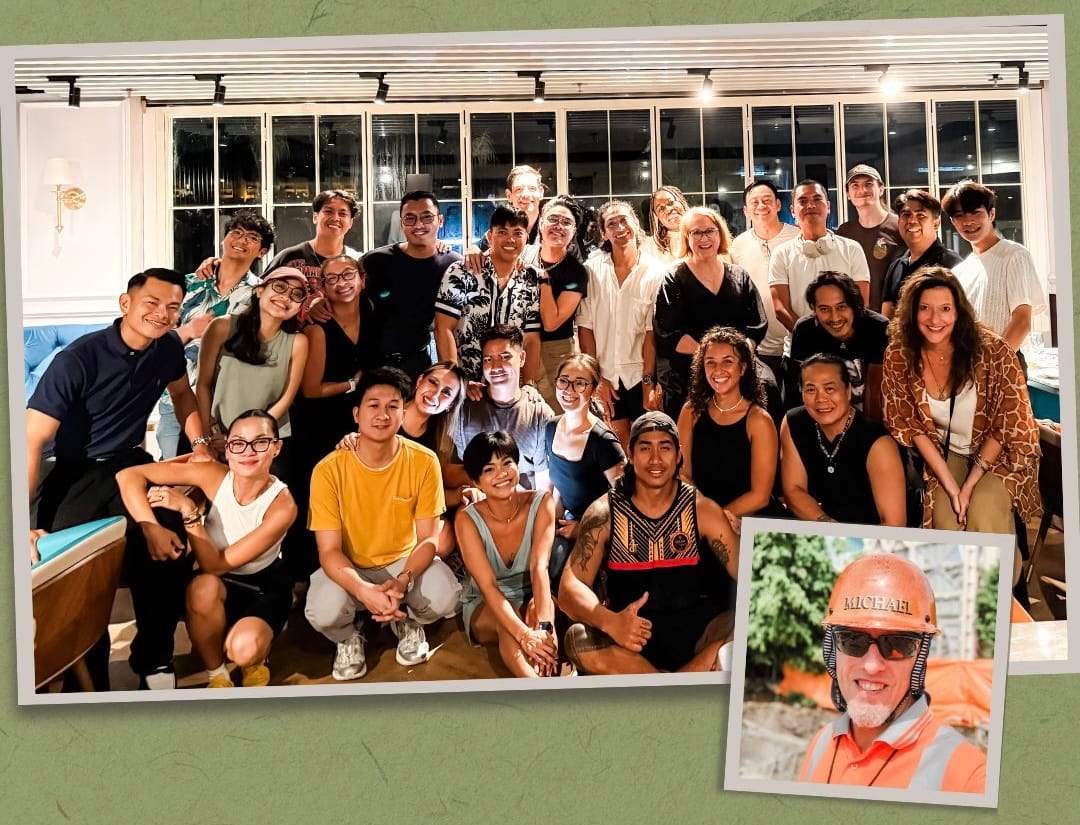
A week ago I broke my toe (really not ideal). Our kitchen ceiling was found to be harboring a substantial amount of water after an especially rainy typhoon season (necessitating a team of contractors who are going to tear it out and replace it over the course of this week, requiring major juggling as Michael is especially prohibited from being around construction, and having a team of construction workers in our very sanitary home is… well, it’s also really not ideal). And our dog Lucy Rocket had a series of medical emergencies requiring extra care and surveillance right when one of our kids has gone back to school for his final semester at university and the other is working exceptionally long hours for a conference coming up this weekend (perhaps Lu is tired of Michael getting all the attention while not being able to get any of his attention, doctor’s orders?).
There’s a handful of other things trying to take us down as well… the most frustrating being the new Out-Patient Clinic schedule which still causes tears from one or both of us every single time (I keep believing it’s going to get better or easier and it persists in doing neither of those things), but there are some GOOD things happening as well and I want to highlight them. Not to downplay the rough and pretend it’s all blue skies (it is most assuredly not) but to give the good some space, to invite it to continue, to grow and spread. To remind myself (and you, if you need it) that life is not either/or, it’s both/and. Let’s do this.
First: Michael had a bone marrow extraction in August to see how much cancer is still hanging around in his body. The test is awful (I won’t link to it, you can google at your own risk if you want to see) and Michael has had so many of them, with so many more to come over the next couple of years. The initial results came in about four weeks later and they looked good, but we needed to wait and see the results of the really in-depth test where they look at the sample at the molecular level, called MRD or Measurable Residual Disease. The results came while Michael was alone in the Out-Patient Clinic at Queen Mary Hospital… an echo of when his was first diagnosed, alone in the General Ward over at Princess Margaret Hospital. But this time it was good news.
MRD testing is so sensitive it can find even one cancer cell among a million healthy cells. And in the sample they took of Michael it showed the level of disease was undetectable.
While still speaking with the doctor, Michael texted me a series of exclamation points. I was in a basement level spot famous for almost no reception and neither his second text to me nor my text to him (I responded with a series of question marks) were going through. I abandoned my lunch and ran up a flight of stairs to get outdoors to call him. My body and mind were primed for terrible news because there’s just so much of it lately. I was standing on a busy sidewalk, surrounded by office workers rushing by on their lunch breaks, heart pounding from the stairs and fear, tears already streaking my face trying to get Michael on FaceTime. When we finally connected he said, “Isn’t that amazing news?” He was crying as well, so I cried harder, trying to reconcile his words “amazing news” with what I was so certain was not, in fact, amazing. He had to repeat multiple times that there was no cancer detected in the sample before my head could believe him, and it took more than an hour for my body to finally calm down enough to recognize that this was the outcome we’ve been praying for constantly over the last eight months.
I taxied back to the hospital and paced the eighth floor of Block K until he finally emerged at the end of his treatment. We just held each other and cried some more, astonished gratitude flooding out of our faces as we sat in the familiar hallway outside the transplant ward. We told our oldest son as soon as we got home (response: immediate rejoicing, hugs all around), but had to wait until the next morning to tell Benjamin who was still at late night rehearsal long after we went to bed (response: a casual “I knew it.” Classic Ben).
Our new reality: the cancer is undetectable but there is still such a long, brutal way to go. We imagined there’d be a cancer on/off switch where life would go right back to the way it was just as quickly as life derailed when he was diagnosed. At the very least we imagined a bell to ring at the end of treatment like our friends have had with other cancers. But there’s no switch, no bell. It’s more like an infinite dimmer dial, controlled by someone with a shaky hand or a long, difficult trail which hasn’t been fully mapped because there are so many ways to go, all of them hard. But this is a major trail marker, a day with three stars in my diary. We’ll share what the future looks like in a future post. For now we are just grateful for a moment to breathe, for answered prayer, for a huge reprieve from this awful disease. No bell to ring, but for once these are happy tears streaking our faces.
Second: One of the truly life changing things we’ve experienced since last Christmas is the way we can’t socialize the way we used to. We can’t host people for dinner. I can’t meet up with friends all the time anymore, or pop into Hong Kong Disneyland when friends from other countries swing by. Most people who die from Leukemia die from what starts as a simple infection (bacterial, viral, or even fungal) which their immature or non-existent immune systems cannot fight. When so much of this disease and its treatment are out of our control, keeping ourselves healthy for Michael’s sake is a solid action we can take. Is dinner with someone who just started having flu symptoms but swears it’s just “allergies” worth Michael ending up back in the hospital? Or worse? I don’t think anyone would say yes, but why is it so hard to say no?
Let me give you a peek behind the curtain into our family and what makes us unique. Two weeks after Michael’s diagnosis, while still free-falling in shock from the new direction our life was taking, a close friend from Los Angeles asked me what I usually do in a typical day, a typical week. I told her about my writing life of course (I spent all of last year working on a one woman show about loss as well as another project about grief), but then I also mentioned my side job, which is people. I shared my long list of precious humans I check in with and support, spending at least an hour a day sending messages or making phone calls. I told her about my shorter list of people I rotate through to take out for coffee or lunch, at least one or two each week for hours at a time. And then there’s an ever-changing group of people who come round for a home cooked feast, deep conversation, and connection a few times a month… close to seventy individual people over the course of three years (which we know because since 2022 we’ve asked everyone who shares a meal at our table sign the underside of it).
This job of people is not one that pays (I’m the one who always picks up the bill), but I took it very seriously. In addition to our local friends, many of the people we know in Hong Kong are like us — immigrants here for work, far from home, far from extended family, and hungry for connection and community. We are lucky… Michael and I and our two adult children, our family, are all here together, under the same roof. We know how rare that is when you live outside your passport country! With that in mind, it’s our highest value as a family to actively look for those who don’t have that and absorb them in, to give them a place to belong and feel safe and loved, for a day or for forever. To suddenly pull the emergency brake on that, to change so completely, felt like losing our identity, who we are at our core, who I am as a person. Life changing in ways which continue to present themselves.
When I started making phone calls to tell people about Michael and the Leukemia, I got a wild range of unexpected responses. Some were shocking and heartbreaking, some were beautiful and kind. When I told our friend Eks (pronounced Ex, who we’ve called our Other Son for at least five years), I apologized because I wasn’t going to be able to meet up with him any time soon. In tears, I lamented the loss of being able to physically support and care for the precious people in our circuit, or to be on the lookout for others who might cross our path. At that point I could only take care of my kids, Michael, and myself, and I wasn’t doing very well with just that. Eks’ response was so generous: you’ve shown all of us what it’s like to be supported and cared for, now let us do that for you. And he did, and I need to talk about it!
For most of Michael’s career he’s either worked in or built theme parks, in particular the performance venues and theaters they contain. All the Disney Resorts in Asia hold his unique fingerprint, places we can visit and point to which bring joy to millions of visitors each year. Eks went to his fellow performers, colleagues and friends, telling them how the places where they sing and dance each day were built by Michael, that he is fighting for his life with this terrible disease, and asked if they’d be willing to give back with an open mic fundraiser. So many said yes, even people who have never personally met Michael. We were so humbled, so surprised.
It was a beautiful night, filled with so many talented people sharing their gifts with both planned sets and spontaneous song. Michael’s severe immunocompromised state and current physical frailty meant there was no way he could attend, but my sons and I showed up in our face masks, with Benjamin running tech and our older son carrying equipment. Ben recorded the whole two hour experience for Michael to watch, while I took 15 second clips of each performance on my phone to text him as the night went on. The whole evening my brain spun with the same thought, over and over: when this whole health crisis is over, I’m going to cook for a week and have all of them over for dinner. I’m going to take every one of them out for coffee, listen to their stories, tell them how awesome they are. I’m crying while writing this because they are so, so awesome indeed, and deserve all the home cooked meals, coffee dates, and undivided attention.
For all their efforts, Eks and his fellow performers raised the amount equivalent to an entire month of the non-subsidized medication Michael has to take to stop the Graft vs Host Disease (GVHD) from trying to kill him instead of killing the cancer cells.
It’s not cheap, it’s $600 HKD ( $78 USD) a day. But it works incredibly well, pulling him out of a life-threatening situation I previously wrote about. Right now Michael does not need to take the even pricier TKI inhibitors I shared about when we started Plucky Day. We don’t know when he’ll need to start that up again, or at what dose. We’ll know more after the results of Michael’s next bone marrow extraction, happening at the end of the month. We’ll worry about that when we get there. For now, we are once again grateful for the moment to breathe, the answer to prayer. We are humbled to be the recipients of such generosity of time, talent, and financial assistance. Thank you to everyone who showed up to watch, who came ready to get on stage, who got dragged up there to share a song, who helped behind the scenes, who couldn’t attend but still sent money. It was a bright spot in a dark time and we’ll never forget it.
I don’t want anyone to ever have to go what we’re going through. But if you ever find yourself in similar circumstances, living right against the edge with only hope, faith, and a refusal to give up sustaining you, I hope and pray you’ll get to experience the somewhat uncomfortable but incredible beauty of receiving.
Third: This hasn’t happened yet, but we are so close. October 3rd will be 100 days post-transplant. It’s another major trail marker, a milestone of survival from the immediate complications which come from bone marrow transplants, including Graft vs Host Disease. There’s so many dangers still to dodge, so much risk to mitigate, but surviving the first hundred days after a bone marrow transplant is a huge hurdle which everyone in this blood cancer world talks about. We’re exhausted and depleted, limping through dirt and mud to get there, but we’re doing it with smiles on our faces, praise and gratitude in our hearts, and bright hope for many more tomorrows. Who needs a bell when we’ve got each other and all of you?
Thank you for reading along and taking this moment to celebrate these GOOD things. More soon!